In recent years, a headline has circulated widely online: a single plastic tea bag can release billions of microplastic and nanoplastic particles into one cup of tea. The number is striking — 11.6 billion microplastics and 3.1 billion nanoplastics — and for many tea drinkers, unsettling.
The claim traces back to a 2019 study published in the peer-reviewed journal Environmental Science & Technology. Researchers examined certain commercial tea bags made from nylon and polyethylene terephthalate (PET), materials commonly used in mesh or pyramid-style tea bags.
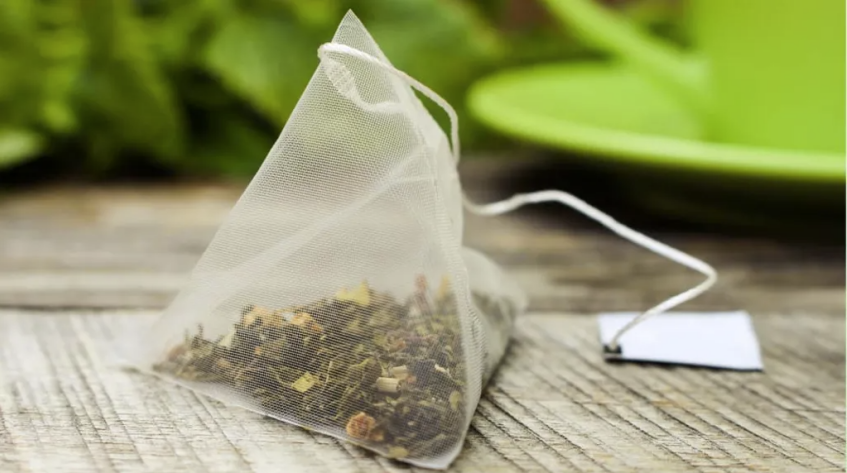
To isolate the effect of the packaging itself, the researchers removed the tea leaves, cleaned the empty bags, and steeped them in hot water at approximately 95°C (203°F), a typical brewing temperature. Using advanced microscopy and particle analysis techniques, they reported that steeping a single plastic tea bag released billions of microscopic plastic particles into the water.
The quantities reported were significantly higher than microplastic levels previously measured in other food and beverage studies, which is why the findings attracted attention from both the scientific community and the media.
However, several important points are often left out of the viral summaries.
First, the study measured particle release under controlled laboratory conditions. It did not conclude that drinking tea from plastic tea bags causes specific diseases or health outcomes in humans. The long-term health effects of ingesting microplastics — from any source — are still being studied, and there is no clear consensus on what levels may pose meaningful risk.
Second, not all tea bags are made of plastic. Traditional paper tea bags are largely cellulose-based, although some may include small amounts of plastic in heat-sealed edges. The study focused specifically on nylon and PET mesh bags, often marketed as premium or “silken” tea bags.
Since 2019, awareness around microplastics has grown. They have been detected in bottled water, seafood, table salt, and even the air. For many experts, the tea bag study fits into a broader conversation about how heat, friction, and time can cause plastics to shed tiny particles.
So what should consumers do?
For those who want to reduce potential exposure, the simplest option is to switch to loose-leaf tea and use a stainless-steel or ceramic infuser. Another approach is to choose brands that explicitly state their tea bags are plastic-free and fully compostable. Companies have increasingly moved away from nylon mesh in response to environmental concerns.
At the same time, it is worth keeping the findings in perspective. The study highlighted a measurable release of particles, but it did not establish direct harm from drinking tea prepared this way. Public health guidance has not changed as a result of the research.
For most people, tea remains a low-risk daily habit. Still, if avoiding unnecessary plastic exposure aligns with your preferences — for environmental or personal reasons — opting for loose-leaf tea or certified plastic-free bags is a straightforward adjustment.
The debate over microplastics is likely to continue as research evolves. For now, the 2019 study serves less as a warning to stop drinking tea and more as a reminder of how deeply plastic materials are embedded in modern life — sometimes in places we rarely think to look.