
There's a special kind of peace that comes from being in your garage with your hands on something mechanical. I'm the guy who likes to tinker—changing my own oil, swapping out parts, just generally puttering around under the hood while the rest of the world does whatever it does. It's relaxing. It's satisfying. And when you finish a job and everything works, it's genuinely rewarding in a way that sitting at a desk all day never quite is.
But every now and then, that peace gets interrupted by a little orange light on your dashboard.
Last month, I was driving along when my car decided to let me know it was running low on oil. Which was strange, because I had changed the oil myself about a year ago—and this was the second time I'd gotten that warning since then. The first time, I figured maybe I had just waited too long between changes. But twice in a year? Something wasn't adding up.
I had a sinking feeling my car was leaking.
So I did what any sensible person would do: I drove it over to a friend who actually knows what he's doing with cars. He's a mechanic, the kind of guy who can listen to an engine for three seconds and tell you exactly what's wrong. I asked him to change the oil and, more importantly, figure out where the leak was coming from.
He put it up on the lift, did his thing, and came back with a diagnosis that was almost embarrassingly simple. The oil filter wasn't tight enough. That was it. A slow, steady drip from a filter that I hadn't cranked down with enough force.
"You need to put a little more muscle into it when you thread the filter on," he told me.
And I said, "But how much is 'a little'?"
Because here's the thing: every forum post, every YouTube tutorial, every piece of advice you'll find online tells you the same thing. Don't overtighten the oil filter. You'll strip the threads. You'll punch a hole through the oil canister. You'll make it damn near impossible to get off next time. So I had always erred on the side of caution—hand-tight, then maybe a quarter-turn more. And for years, that had worked fine. No leaks, no problems.
Until it didn't.
My friend pointed out that every car has a manual, and every manual tells you exactly how much torque to apply to the oil filter. Which is great information, except for one tiny problem: how am I supposed to know how much force I'm actually using?
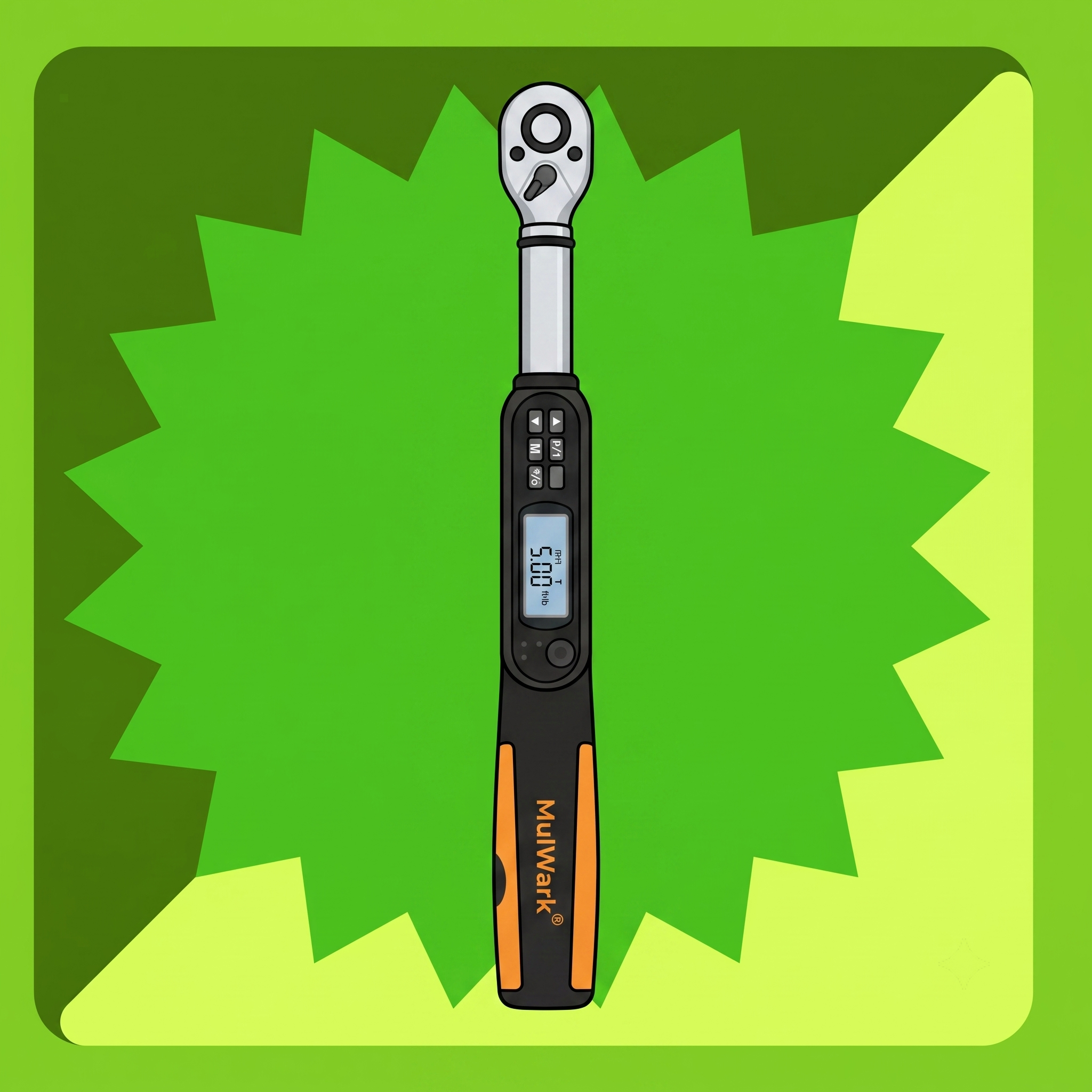
He grinned and handed me his tool of choice. A digital torque wrench.

I'd seen torque wrenches before—the old click-type ones that make a satisfying snap when you hit the right setting. But this was different. It had a digital readout, lights, the whole deal. He had me try it out, and honestly, it was like night and day. As I got close to the specified torque, the handle started flashing and beeping, gently letting me know I was in the zone. When I hit the exact number, it lit up and confirmed I was done.
No guessing. No second-guessing. No hovering somewhere between "probably tight enough" and "oh no, I just ruined my oil pan."
That little digital display gave me something I didn't even realize I was missing: confidence. The confidence to tighten something exactly as much as it needs to be tightened, without the nagging fear that I was either going to cause a leak or destroy my engine in the process. It turned a vague, anxiety-inducing instruction ("tighten to spec") into something concrete and measurable.
I bought one the next week.
Now, I'm not saying a digital torque wrench is going to turn you into a master mechanic overnight. But if you're like me—someone who enjoys working on their own car but doesn't always trust their own judgment—it's one of those tools that makes you wonder how you ever got by without it. It's the difference between hoping you did something right and knowing you did.
And honestly? That peace of mind is worth every penny.
Because there's nothing quite like finishing an oil change, wiping your hands on a rag, and driving away without that little orange light flickering in the back of your mind.