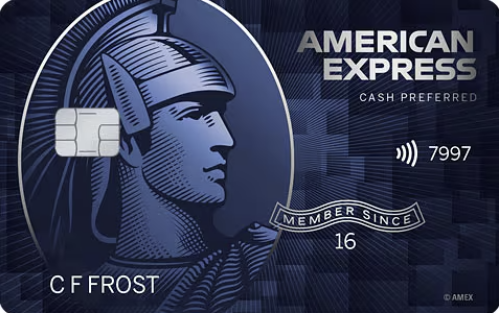
The Amex Blue Cash Preferred Review: Is the $95 Fee Worth the 6% Grocery Power?
This is a card with an incredibly high floor. It doesn't require you to master complex airline redemption charts, nor does it demand endless searching for hotel award availability. You only need to do one thing: swipe it at the supermarket.
After discussing the premium travel cards that promise a trip to the Maldives, let's bring our focus back to the essentials—the card you use for your weekly haul of groceries, whether at Whole Foods, Trader Joe’s, or specialty markets like 99 Ranch and H-Mart. This is the Blue Cash Preferred® Card from American Express (BCP), often hailed as the undisputed champion of the grocery category.
The BCP is a Cash Back card. There are no brain-bending points valuations or complicated transfer partners. It pays you in cold, hard dollars that can be applied directly to your statement. It’s simple, direct, and stress-free. But it does come with a $95 annual fee (often waived for the first year, but we must consider the long-term cost). Is paying an annual fee just to buy groceries truly worth it?
I. The Core: Built for the American Household
The BCP's reward structure is laser-focused on essential household spending. Its cash back categories precisely cover the daily needs of most American families:
-
6% Cash Back at U.S. Supermarkets: This is the main event. You earn 6% back on your first $6,000 in spending at U.S. supermarkets per calendar year (after which it drops to 1%).
- What counts: Includes major chains like Whole Foods, Kroger, Safeway, and most stores coded as "Grocery" (including ethnic markets like 99 Ranch and H-Mart).
- What doesn't count: Crucially, this excludes warehouse clubs (Costco, Sam's Club) and superstores (Walmart, Target).
-
6% Cash Back on Select U.S. Streaming Subscriptions: This covers popular services like Netflix, Disney+, Spotify, and YouTube Premium. This category is unlimited.
-
3% Cash Back at U.S. Gas Stations & Transit: This includes gas fill-ups, Uber/Lyft rides, parking meters, tolls, and train tickets. This category is also unlimited.
-
1% Cash Back on All Other Purchases.
II. The Math: Is the $95 Annual Fee Justified?
Many people ask: "Amex also offers the no-annual-fee Blue Cash Everyday (BCE) card, which gives 3% back on groceries. Is the extra 3% on the BCP worth the $95 annual fee?"
This is a simple break-even calculation. Let's compare the two:
| Card | Grocery Cash Back | Annual Fee |
|---|---|---|
| BCP | 6% | $95 |
| BCE | 3% | $0 |
To determine the break-even point, we need to find the grocery spend ($X) where the net cash back from the BCP equals the cash back from the BCE:
$$ (0.06 \times X) - \$95 = 0.03 \times X $$ $$ 0.03 \times X = \$95 $$ $$ X = \$3,166.67 $$
The Conclusion: As long as your annual spending at U.S. supermarkets exceeds $3,167 (or about $61 per week), the annual-fee BCP is more rewarding than the no-fee BCE.
For any individual or family living in the U.S., spending over $60 a week on groceries is almost guaranteed. A single trip to Whole Foods or a major stock-up at a specialty market can easily hit $100. The $95 fee is easily absorbed by the superior rewards rate.
Net Earnings Example (Maxing out the $6,000 Cap):
- $6,000 spend $\times$ 6% = $360 Cash Back
- Minus $95 Annual Fee = $265 Net Gain
This calculation doesn't even factor in the unlimited 6% on streaming, the 3% on gas/transit, or the lucrative sign-up bonus. The bottom line: If you cook and eat, this card belongs in your wallet.
III. The Advanced Play: The "6% on Everything" Secret
This is the secret sauce that elevates the BCP from a great grocery card to a legendary one.
While the 6% is officially limited to "U.S. Supermarkets," what do supermarkets sell? Gift Cards.
The Strategy:
- Need to shop at Amazon? Want to renovate with Home Depot? Need to reload your Starbucks app?
- Go to your local Kroger, Safeway, or Stop & Shop.
- Purchase a gift card for Amazon, Home Depot, Starbucks, or even major retailers like Macy's or Nordstrom.
- Pay with your BCP.
The Result: American Express processes the transaction as a "Supermarket Purchase," and you receive 6% cash back on the gift card purchase.
This effectively allows you to turn your spending at Amazon, Starbucks, Apple, and countless other retailers into a 6% cash back opportunity, all while working toward your $6,000 grocery cap. For the savvy spender, that $6,000 limit suddenly feels far too small!
IV. Hidden Benefits and Perks
Despite being a cash back card, Amex has not skimped on valuable cardholder benefits:
- Disney Bundle Credit: Receive a monthly statement credit of up to $7 when you use your BCP to pay for the Disney Bundle (Disney+, Hulu, and ESPN+). If you already subscribe, this is a free $84 per year benefit.
- Return Protection: This is an extremely useful, often-overlooked perk. If a merchant won't accept a return (e.g., a "Final Sale" item), Amex may refund the purchase price within 90 days of purchase (up to $300 per item, $1,000 per year). Many premium cards have cut this benefit, making its inclusion on the BCP a significant advantage.
- Sign-Up Bonus (SUB): The typical offer is a bonus of $250 to $300 after spending $3,000 in the first six months. If you can find an offer that also waives the first year's annual fee, it's a no-brainer application.
V. Drawbacks and Pitfalls to Avoid
To provide an objective review, we must address the card's limitations:
- The $6,000 Cap: This is the card's biggest weakness. For large families, this limit can be hit in six months or less. Once you exceed $6,000 in grocery spending, the rate drops to a meager 1%. Crucial advice: Once you hit the cap, put the BCP away and switch to a different card for the remainder of the year.
- Superstore Exclusions: Remember that Walmart, Target, Costco, and Sam’s Club are not considered U.S. Supermarkets by Amex. Purchases at these locations will only earn 1% cash back.
- Foreign Transaction Fee (FTF): The BCP charges a 2.7% fee on all purchases made outside the U.S. This card is strictly for domestic use.
VI. Who Should Get This Card?
The BCP is an excellent fit for several key demographics:
- The Home Manager (Families/Couples): If you are responsible for household spending and your annual grocery bill easily exceeds the $3,200 break-even point.
- The Savvy Student/Young Professional: If you cook at home to save money and subscribe to multiple streaming services.
- The Commuter: The 3% back on gas and transit provides solid, unlimited rewards for those who drive or rely on public transportation.
- The Cash Back Purist: If you prefer simple, tangible rewards and refuse to engage in the complex world of points and miles valuations.
VII. Summary and Strategy
The Amex Blue Cash Preferred (BCP) is a card with an exceptionally high floor. It requires no advanced knowledge of the rewards world. You just need to do one thing: swipe it at the supermarket.
Our Recommended Strategy:
- Application: Target an offer that waives the first year's annual fee and provides a high Sign-Up Bonus ($250+).
- Usage: Focus on maximizing the $6,000 grocery cap, using the gift card strategy to fill any gaps with spending you would have done elsewhere.
- The Upgrade/Downgrade Loop (The "Amex Pop-Up"):
- If you decide the $95 fee isn't worth it in the second year, call Amex and downgrade the BCP to the no-annual-fee Blue Cash Everyday (BCE).
- Amex will often send you a targeted upgrade offer a few months later, such as "Upgrade back to BCP and spend $1,000 to get a $150 bonus."
- By accepting this offer, you effectively get paid to re-upgrade, allowing you to hold the "God Card" long-term while minimizing or even profiting from the annual fee.
Final Word: If you live in the United States and are responsible for your own food and household expenses, keeping the BCP in your wallet is a financially sound decision that consistently pays off.